


$60.00
LW Planes Series – Wingspan 878 mm / 34.6 in
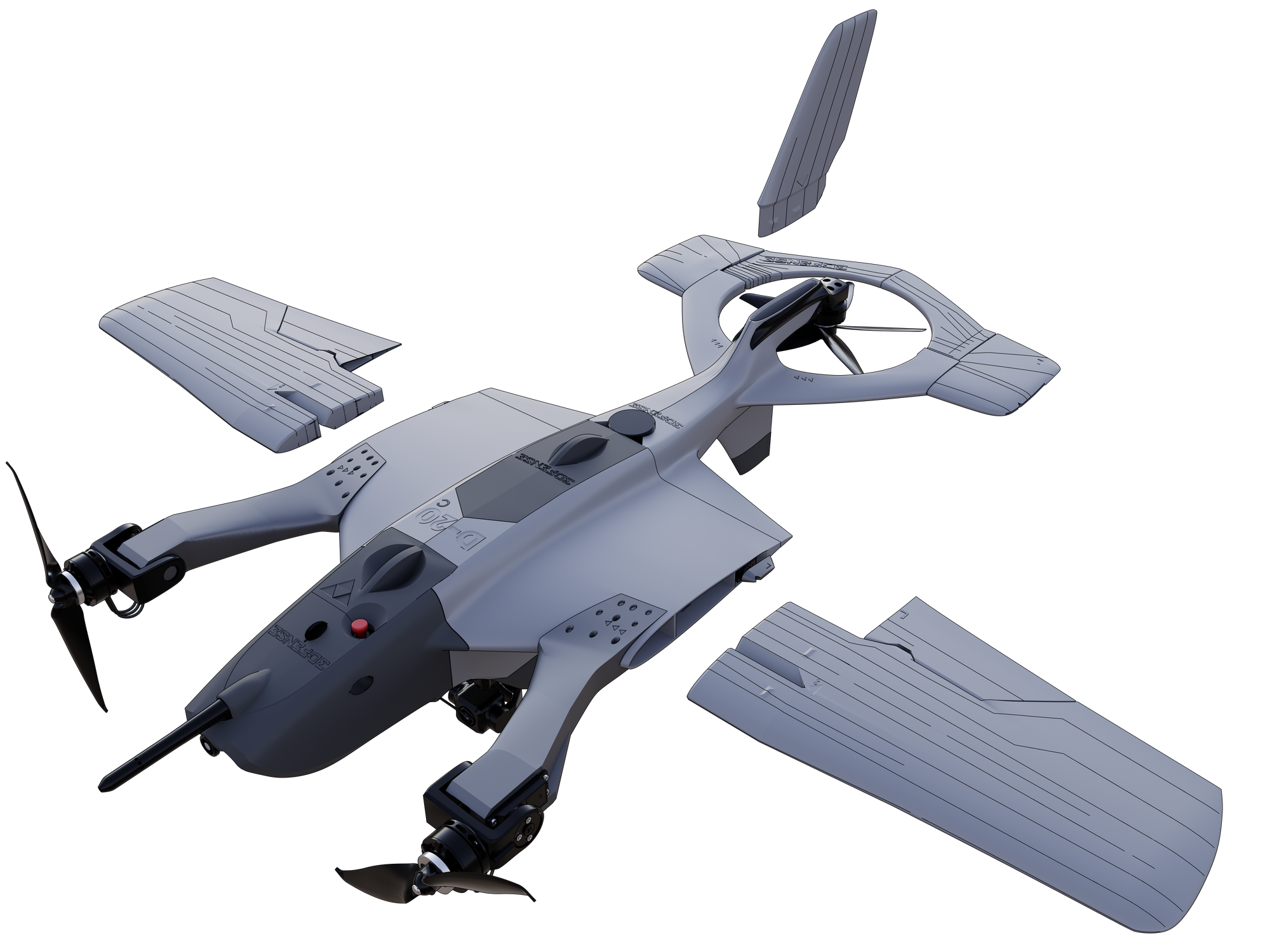
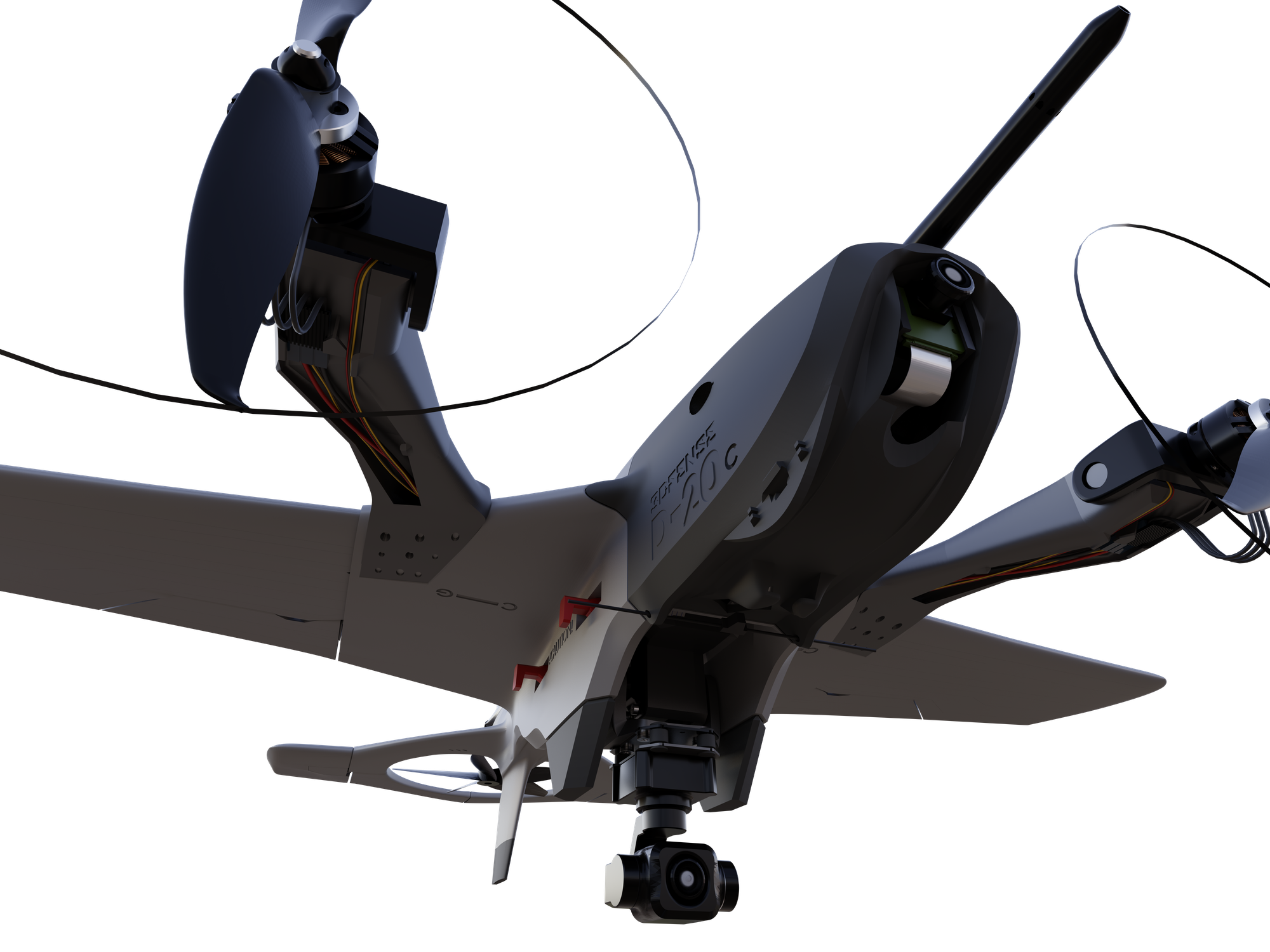
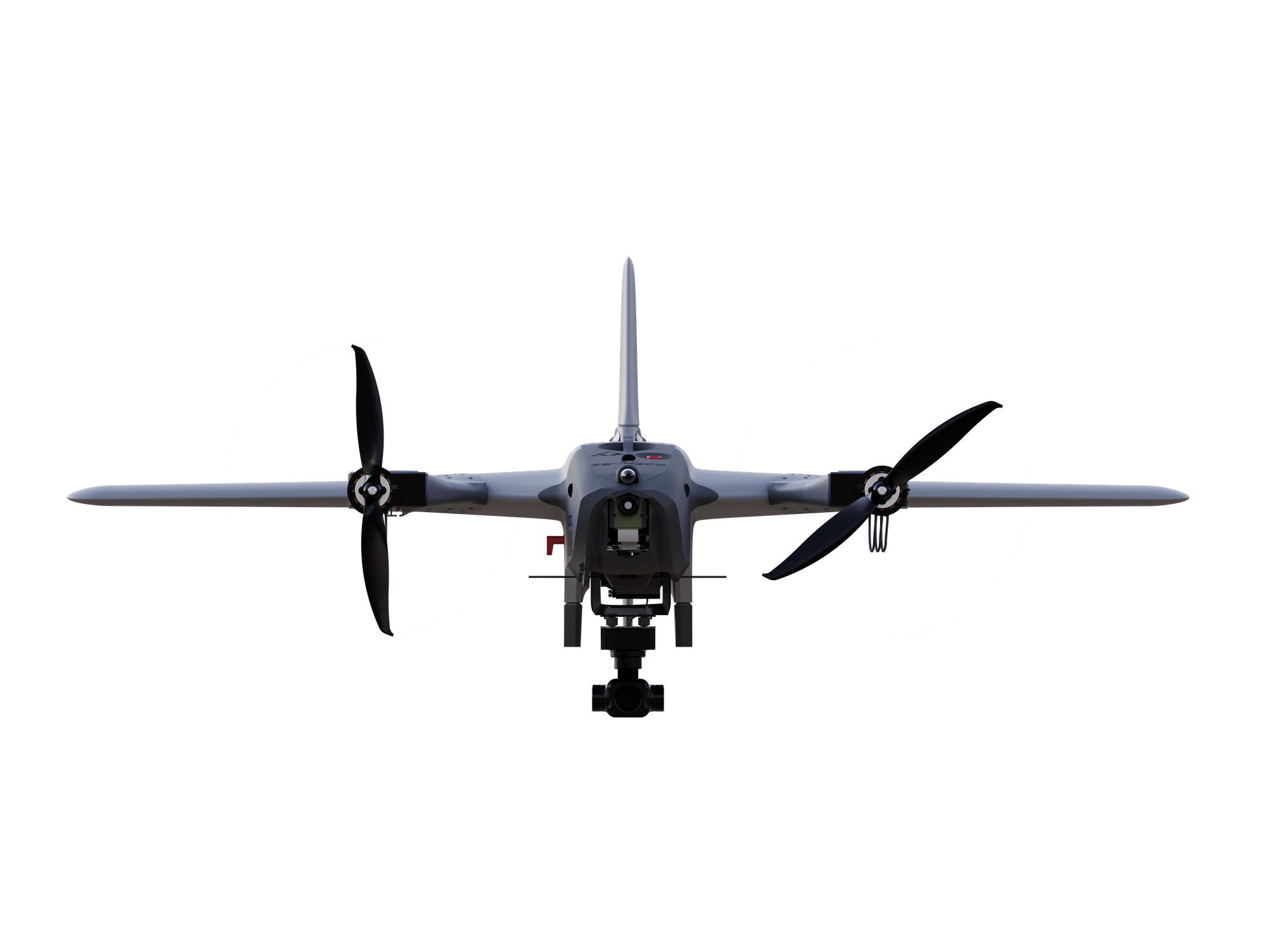
D-20C Personal Eagle II
Fully 3D-printable personal VTOL (tiltrotor 2+1) — 850 g payload, 70 min endurance, up to 75 km range. Designed for the plug-and-play NavPack D04 with one-button Autolaunch.
Included:
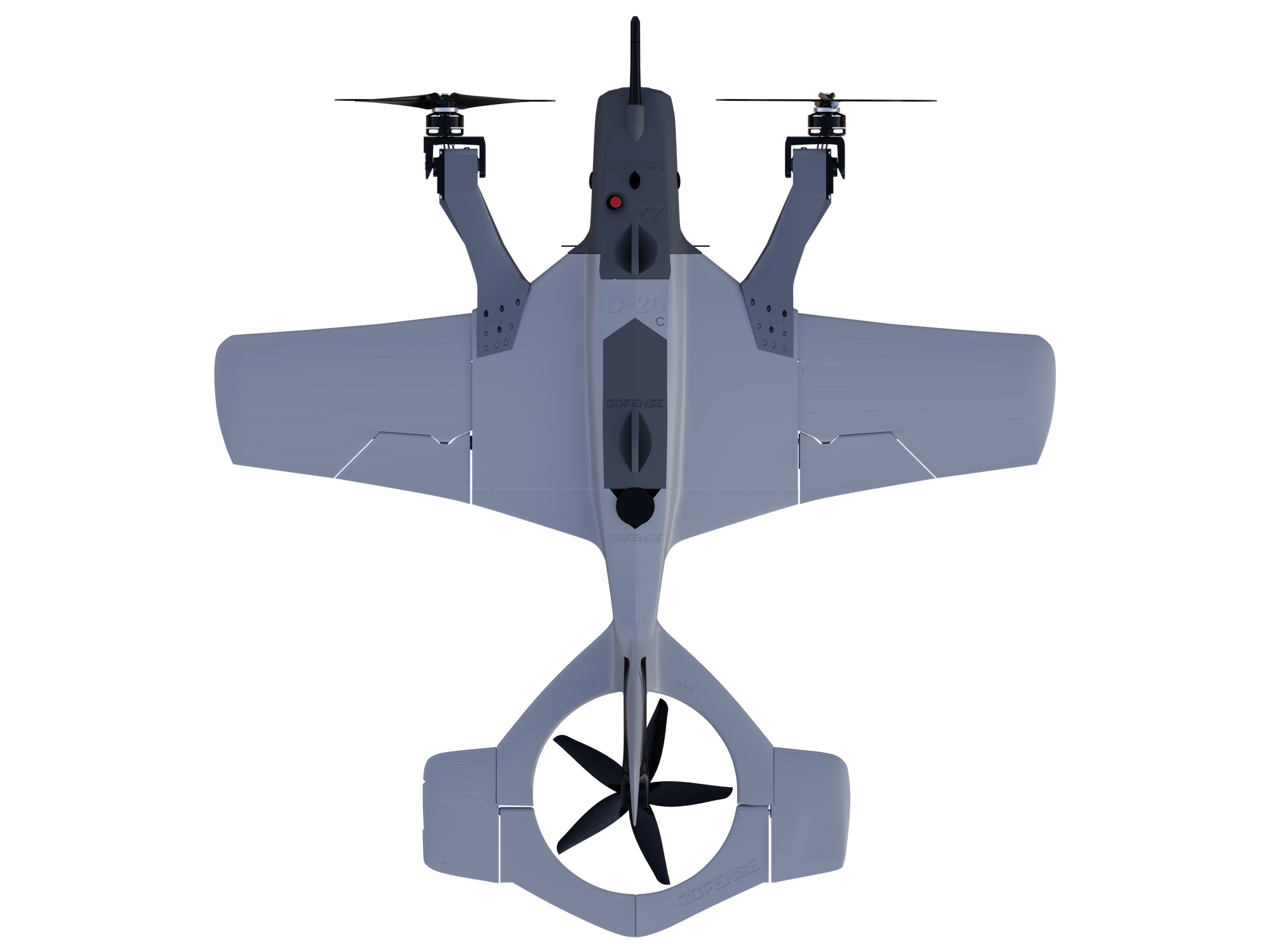
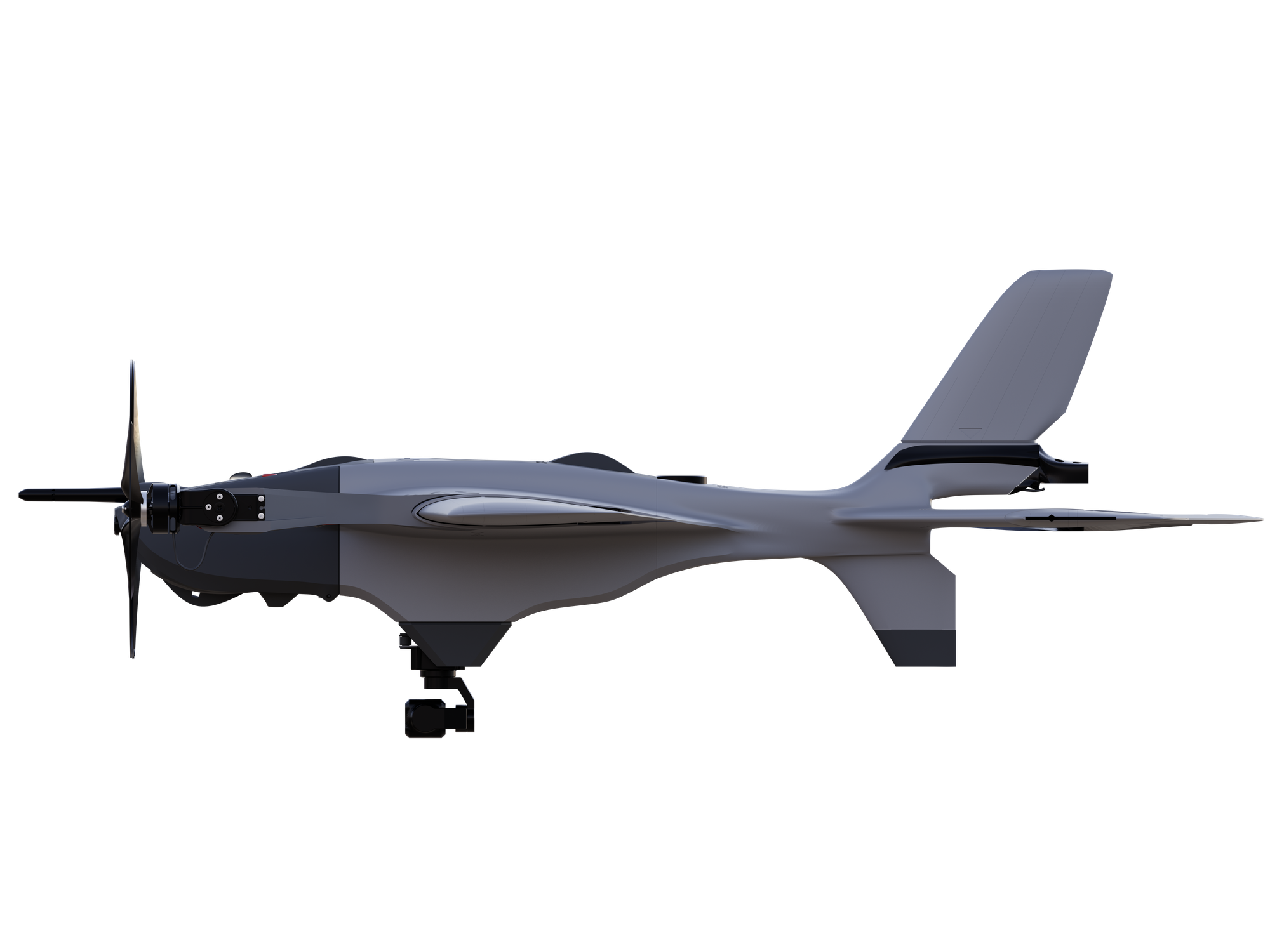
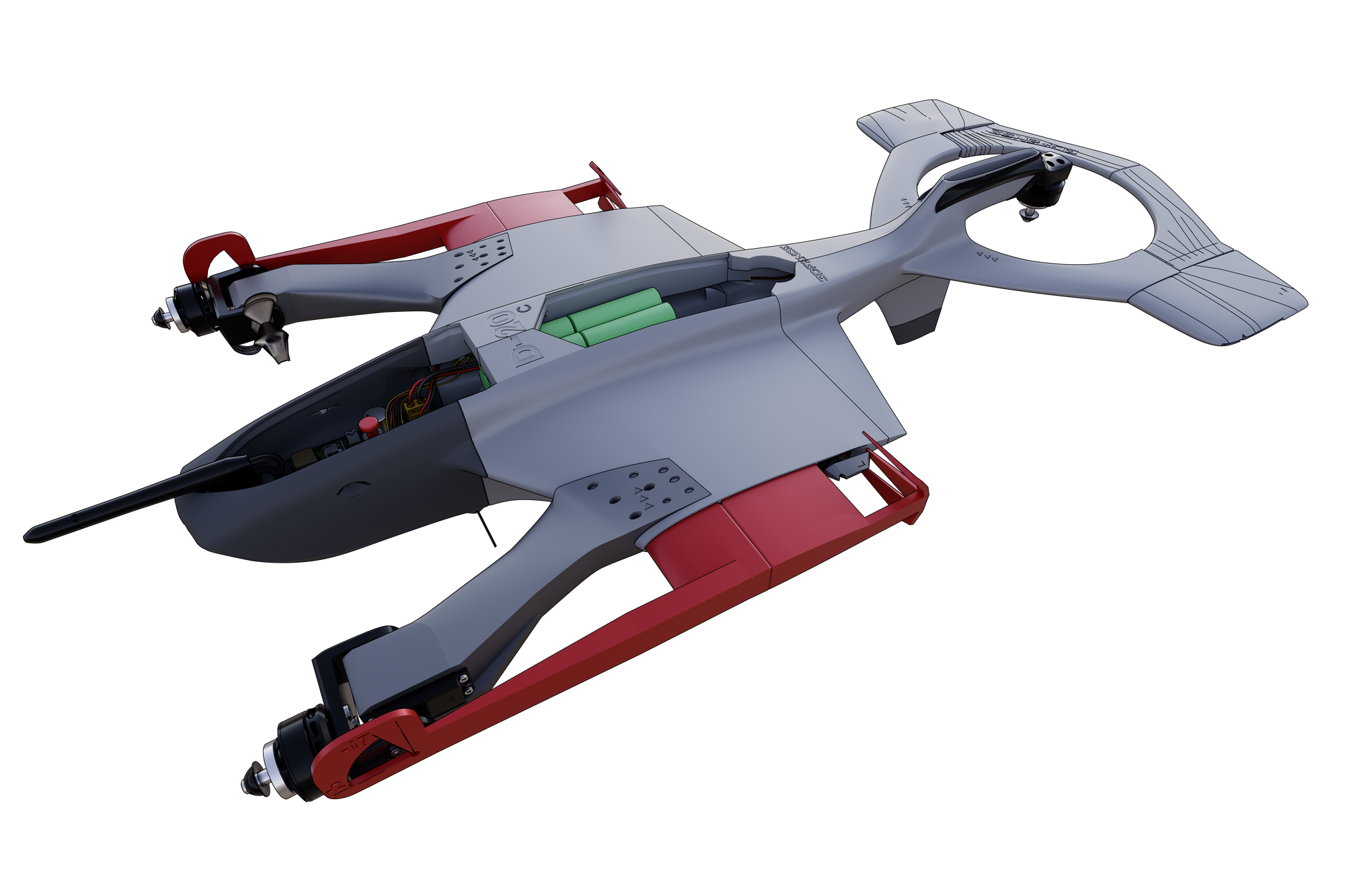
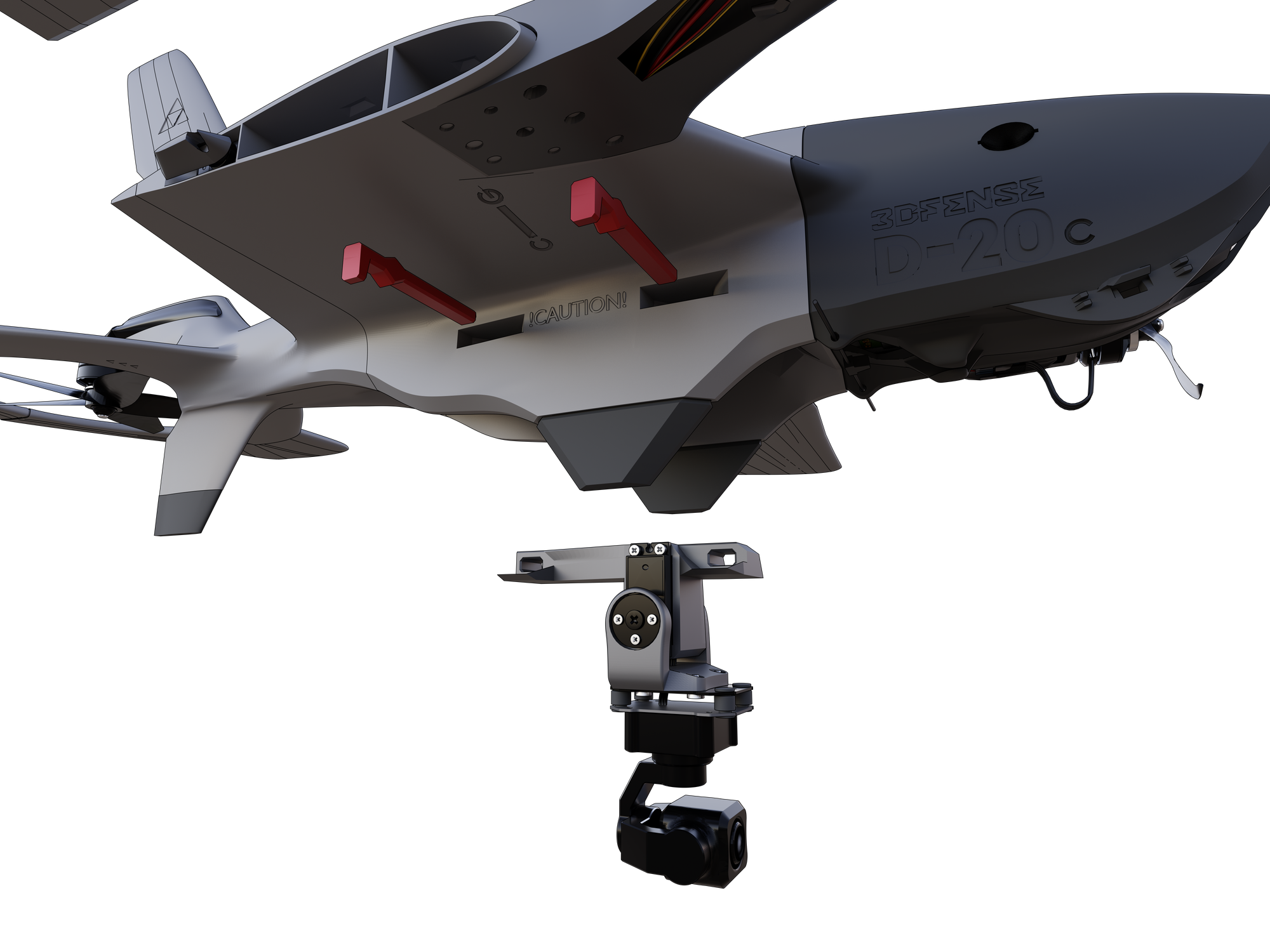
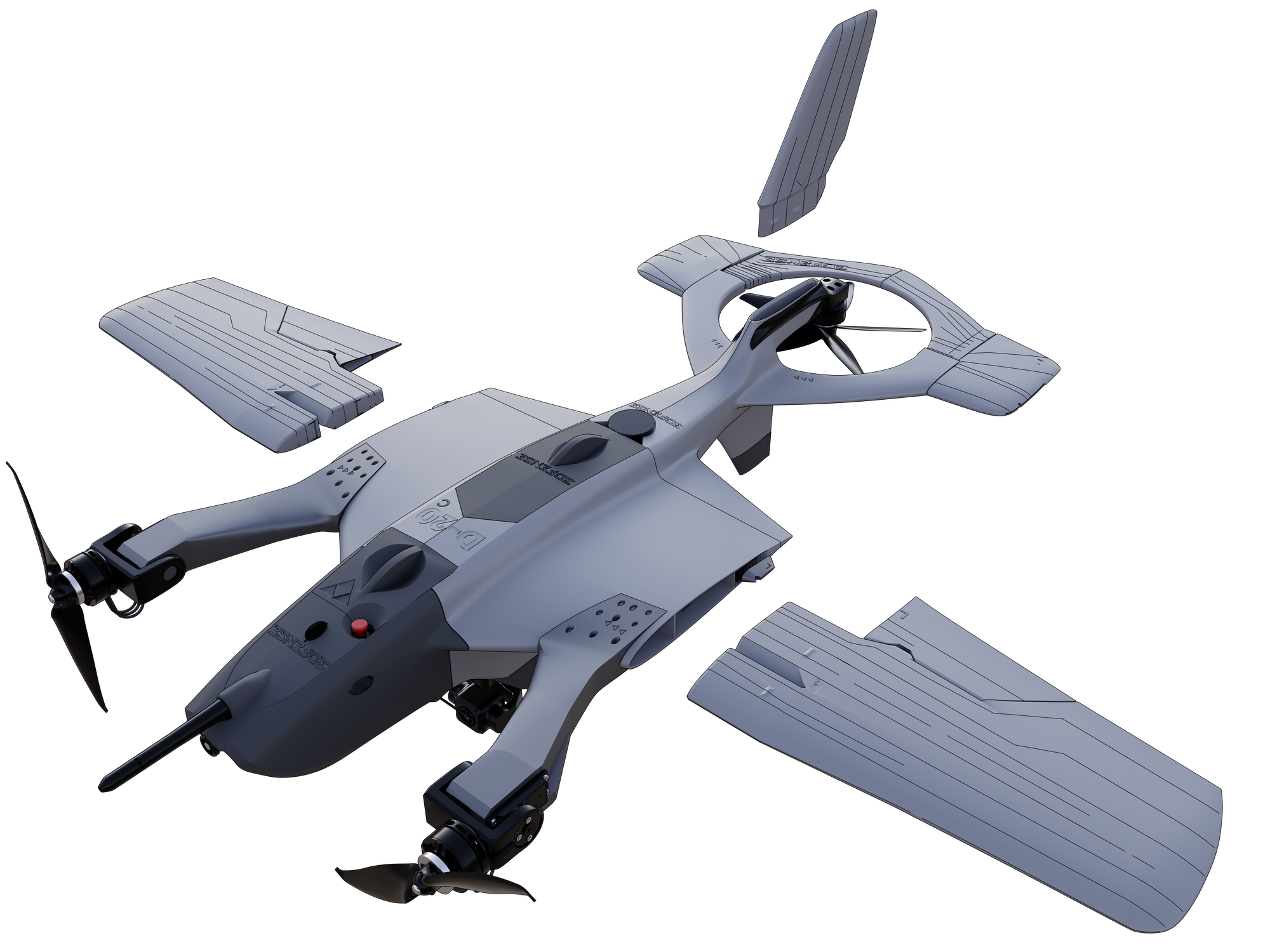
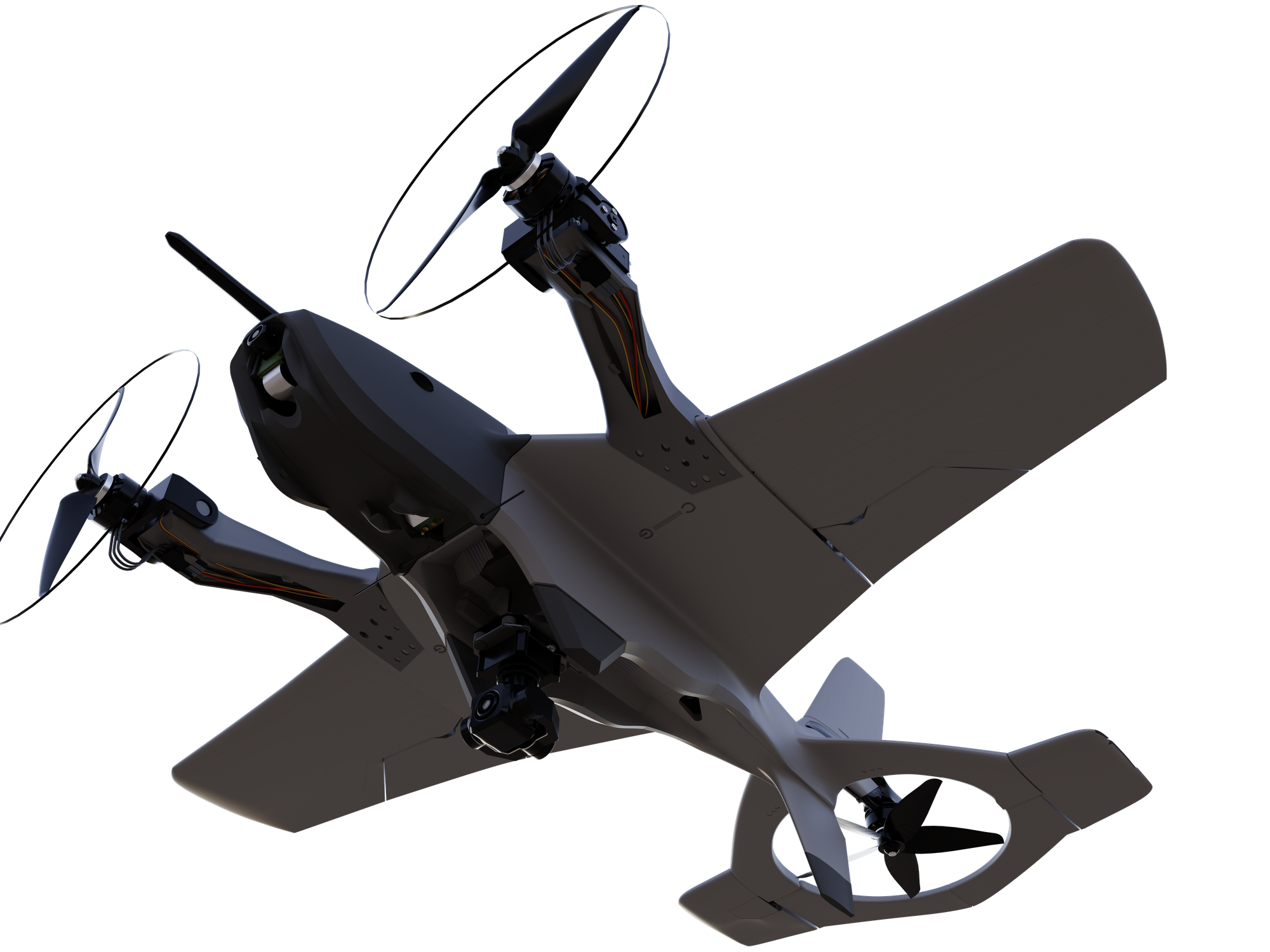
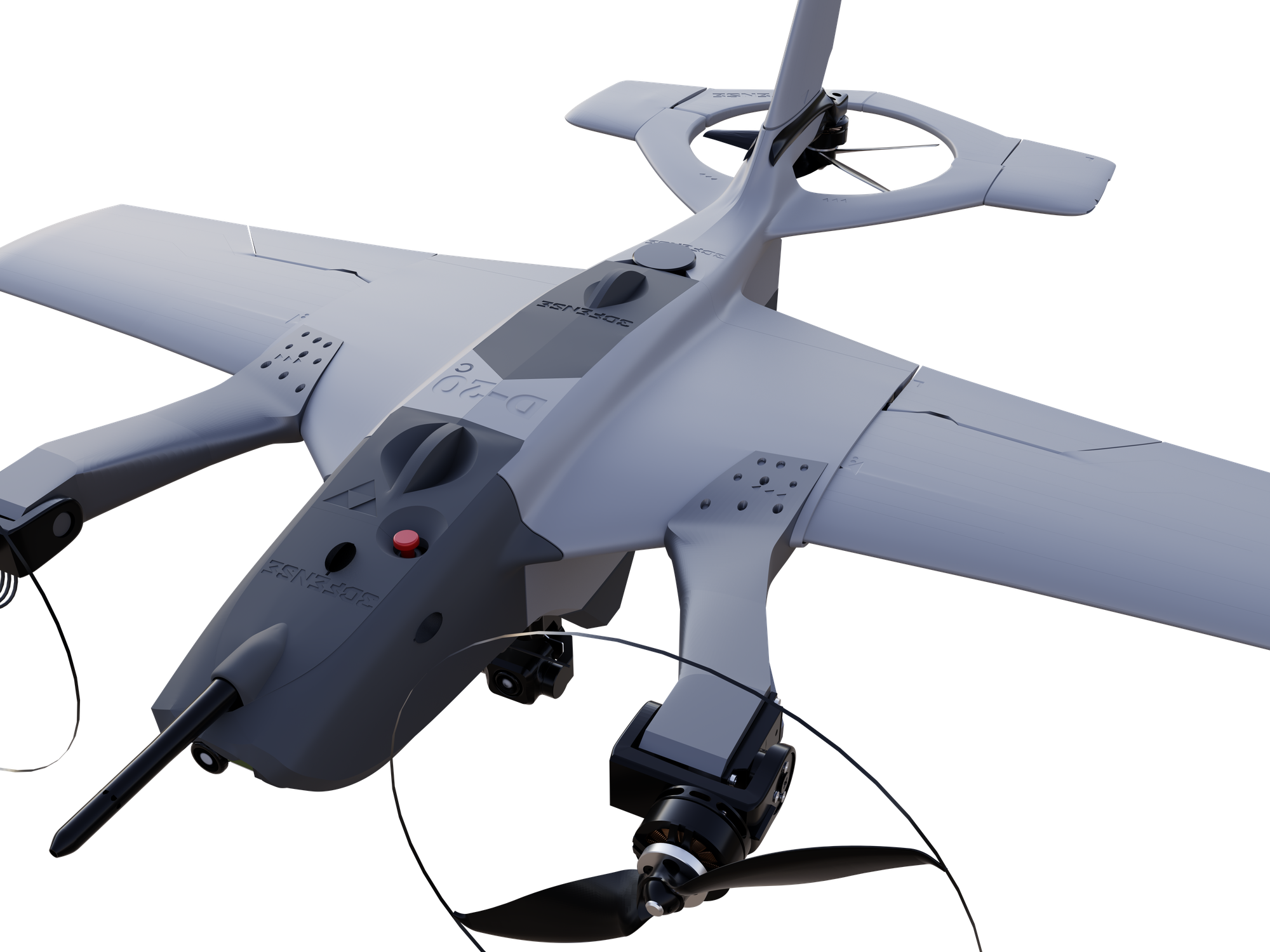
The D-20C Personal Eagle II is a fully 3D-printable fixed-wing hybrid VTOL — the civilian variant of our D-20 platform. It carries an 850 g payload over long distances — up to 75 km one way, 70 minutes in the air. Two tilting front rotors and a third rotor inside the ring tail lift the aircraft straight up from a backyard, forest clearing or boat deck; then the front gondolas tilt forward and the D-20C flies like an efficient airplane.
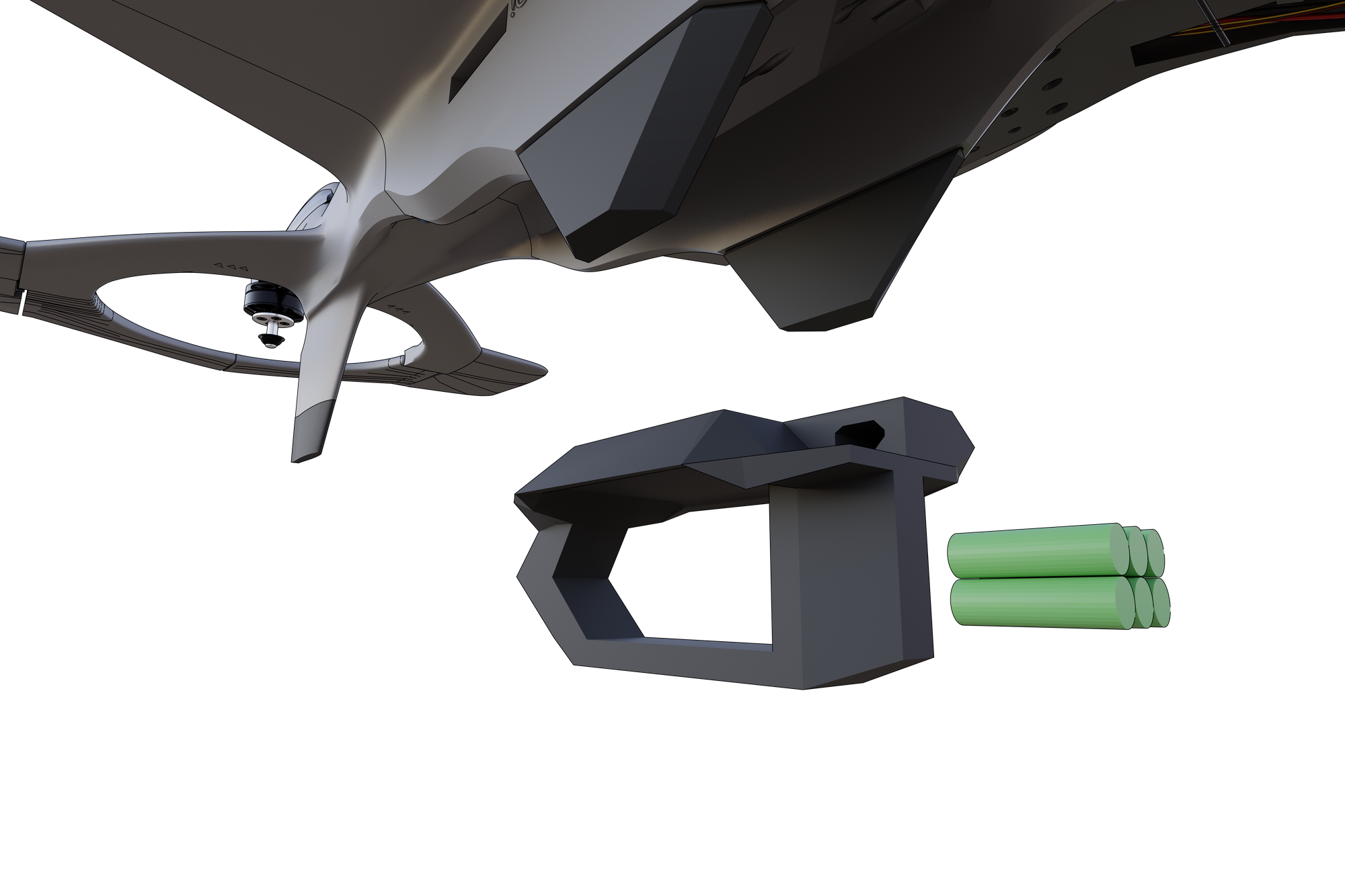
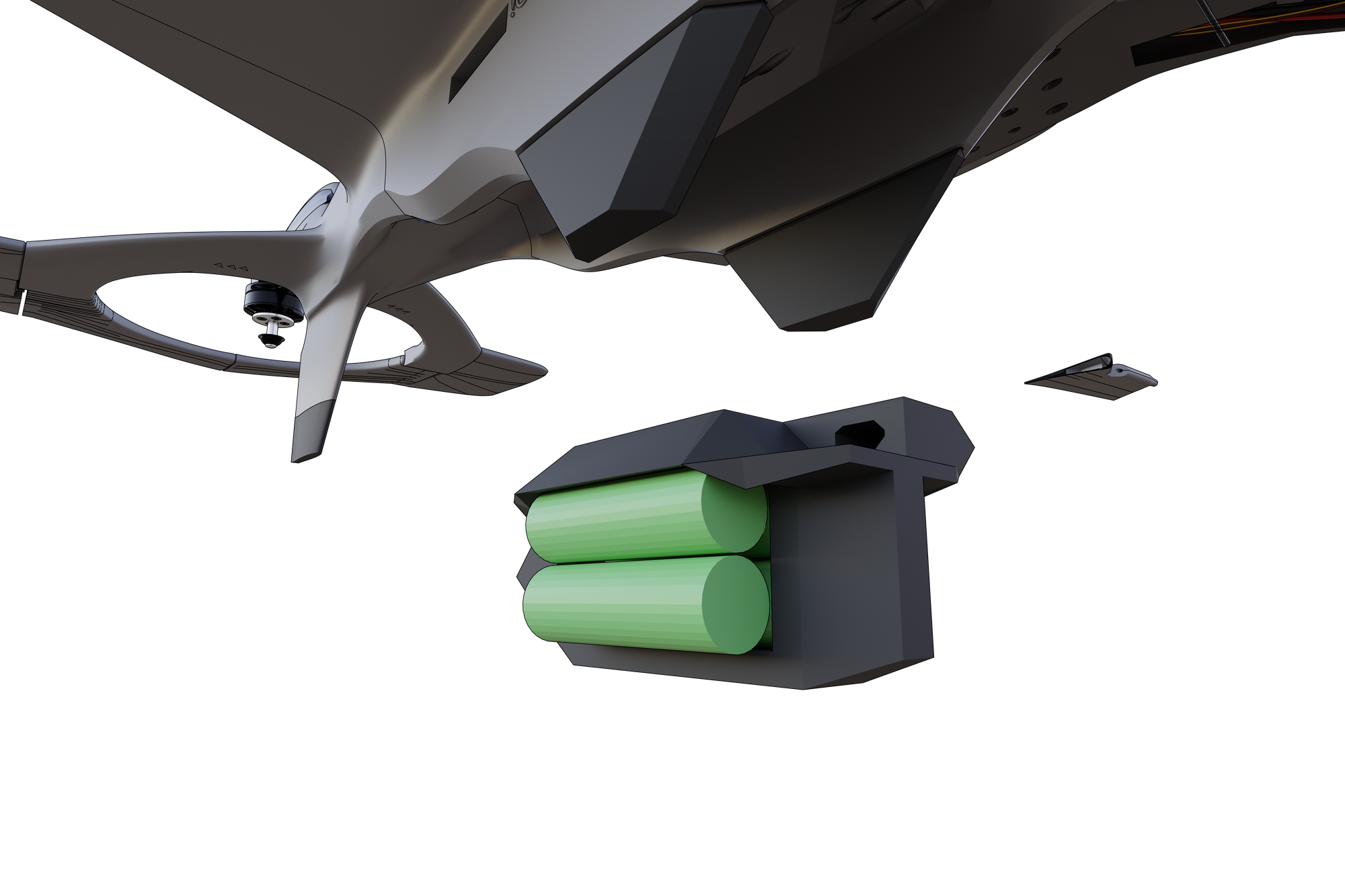
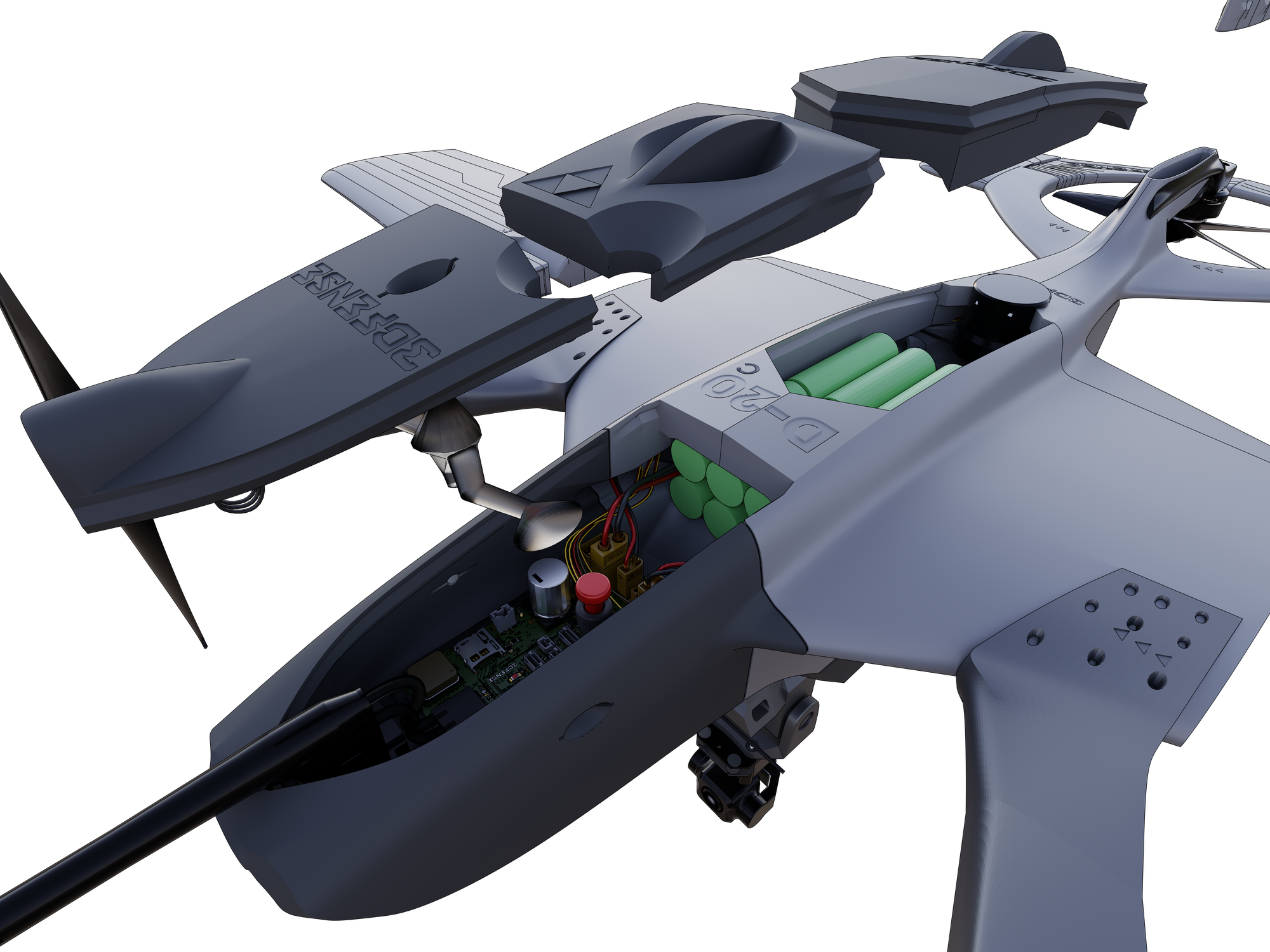
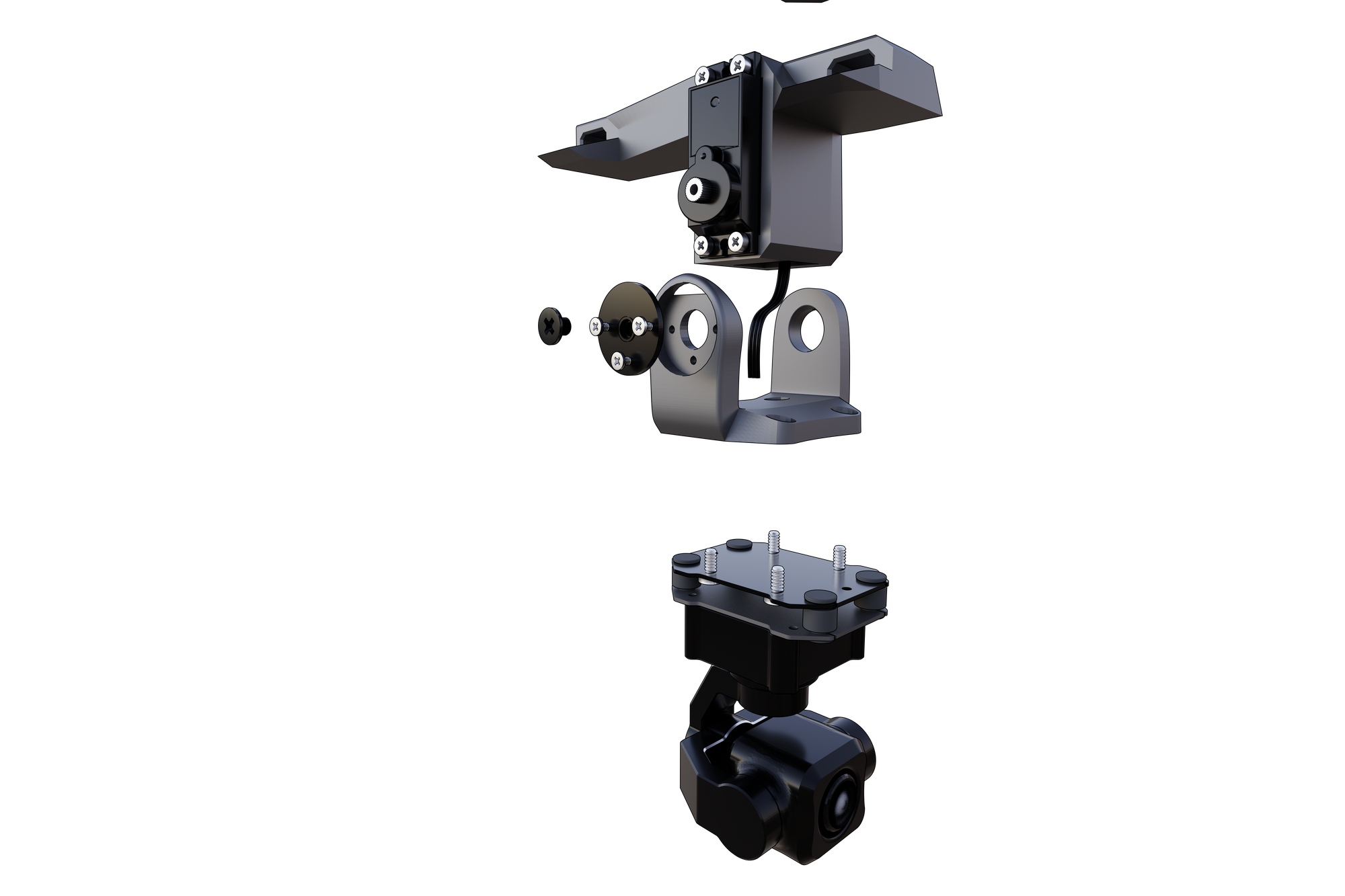
Typical missions: aerial photography and video, mapping and surveying, search & support, FPV training, long-range cruising — the quick-swap payload bay accepts a camera gimbal, extender battery or cargo.
| Type | Fixed-wing hybrid VTOL (tiltrotor 2+1) |
| Wingspan / length | 878 mm / 896 mm (34.6 in / 35.3 in) |
| Max takeoff weight | 3350 g |
| Payload capacity | 850 g |
| Cruise / max speed | 79 km/h / 144 km/h (stall 58 km/h) |
| Endurance | 70 min fixed-wing (90 min with extender battery) · 25 min hover |
| Range | up to 75 km one-way ISR-profile mission |
| Wind resistance | 15 m/s fixed-wing · 8 m/s VTOL |
| Operating temperature | −20 °C to +40 °C |
| Battery | 6S2P Li-ion 21700, ~10 000 mAh |
| Assembly | 8 CA-glued joints, under 30 min · tool-less field setup under 2 min |
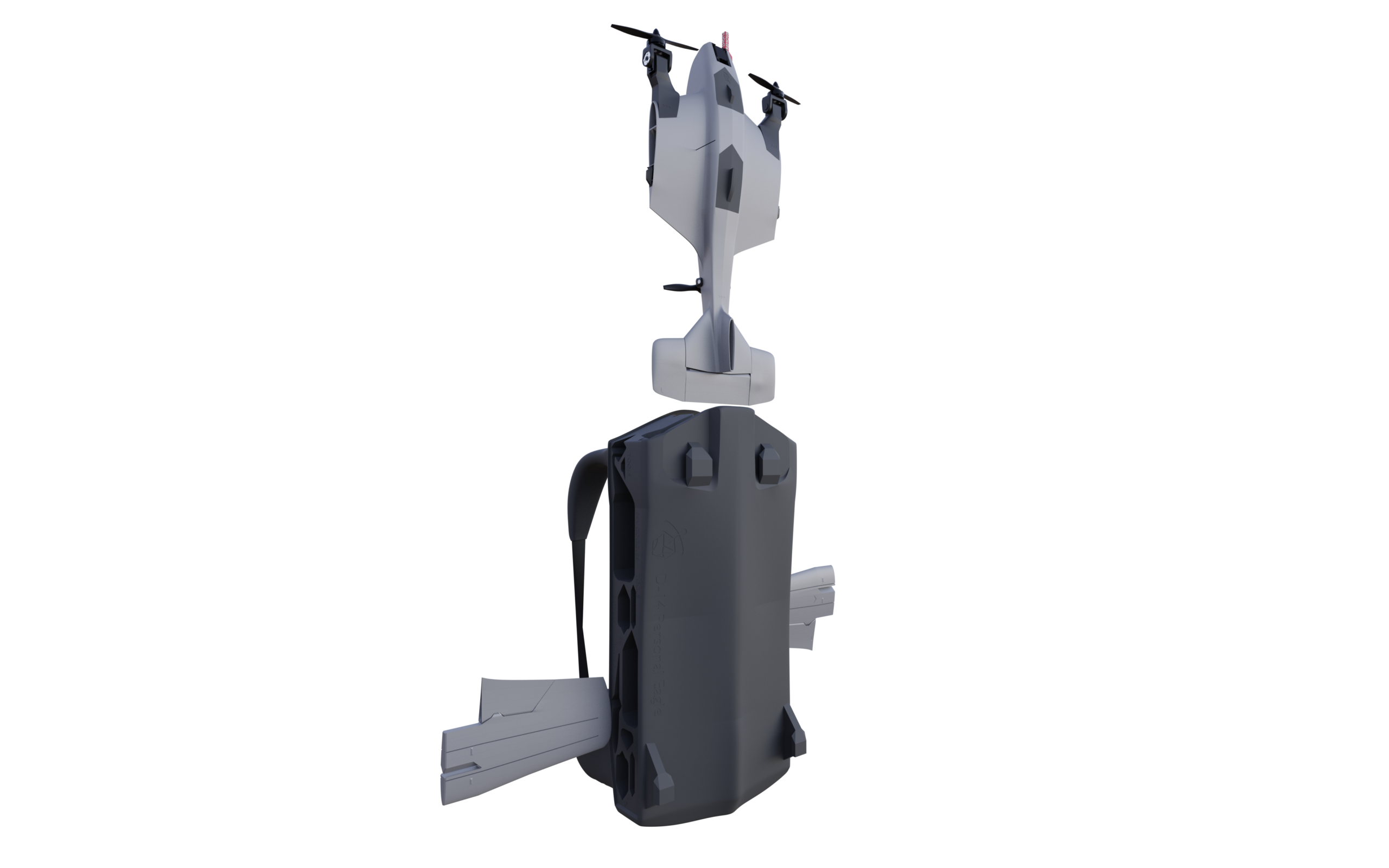
XL folder with larger one-piece sections for the Prusa XL (fewer joints)Coming soon as a free update: the printable transport backpack, adapted to the D-20C — the whole aircraft, wings off, carried on your back. From backpack to air in under 2 minutes.
The D-20C is designed for our plug-and-play NavPack D04, which ships pre-flashed with the complete D-20C setup — autopilot, GNSS, professional magnetometer, digital airspeed and all power electronics on one board. No soldering of modules, no weeks of parameter tuning: plug in motors and servos and go flying.
Flying it on a different ArduPlane flight controller (e.g. Matek H743 Wing)? Download the free universal D-20C parameter file — the complete airframe tuning (VTOL + fixed-wing PIDs, transitions, servo functions and end points, Siyi gimbal and gimbal-holder setup) for any ArduPlane 4.6+ board; only board-specific setup and calibrations remain on you. See the NavPack in action: NavPack video.
2× front motor 2812 900 KV with tilt servos, 1× rear motor 3110 1200 KV, 3× 50 A ESC (BDShot), 3× control-surface servo, NavPack D04, 6S2P Li-ion battery, mLRS/ELRS/CRSF RC system. The complete shopping list with specs, cable lengths and connectors is in the User Guide.
3D printer with a 0.4 mm nozzle and direct-drive extruder, build area 250 × 210 mm or larger (G-code for Prusa MK4S; XL folder for large-format printers — and the included slicer-settings table lets you port the profiles to any machine).
PolyLight 1.1 active-foaming LW-PLA, FlexiLight 1.0 foaming flex, PolyAir strong PLA and PET-G.
PrusaSlicer or OrcaSlicer (both free).
You’ll receive a link for all files to your email inbox and after checkout, the download button appears (in most cases immediately). Or login to your account and download directly from our website anytime.

We are looking for partners to represent 3DFENSE in other parts of the world — selling the complete UAV Production System: a turnkey capability to print, build and operate UAV fleets locally, aimed not only at defence but at universities, public services, research and civil institutions. Hands-on experience with the D-20C (or other 3D-printed aircraft) is expected — if you have built one and see the potential, we want to hear from you: dokoupil@3dfense.com
3DFENSE — from printer to sky. Vertically.
Extensive hi-tech 3d structural reinforcement resulting in solid yet lightweight airframe thanks to additive 3Dprinting technology
Each plane has been thoroughly tested to find ideal shape and best possible inner structure
Choose your aircraft, download 3d files and print as many you need. Using your desktop 3Dprinter